
⚠️ Safety note: General interior joints (window frames, skirting, basin edges) are forgiving — following the pack instructions is usually fine. Facades, glass curtain walls, structural glazing, pools and permanently submerged joints are high-risk work and must follow the product's technical data sheet (TDS) and structural design, with input from relevant professionals. This article is general guidance only; the actual method depends on site conditions and the TDS.
Are "glass glue", sealant and silicone the same thing?
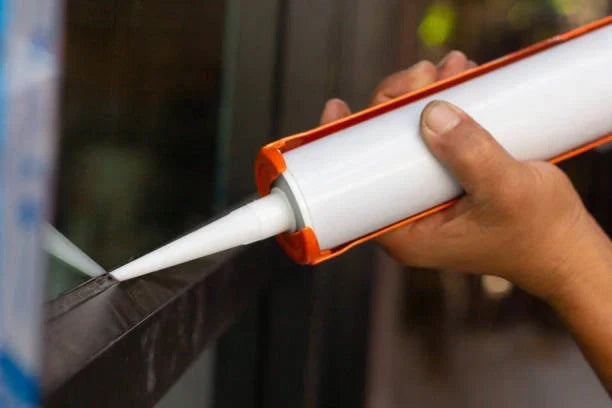
Basically, yes. In the trade "glass glue", "sealant" and "silicone" usually refer to the same family — a single-component, gun-applied material that stays elastic once cured. The difference isn't the name, it's the formulation: cure type, modulus (soft or firm), movement capability (how much it can stretch/compress), and weather/chemical resistance. Pick the right one and a joint lasts for years without cracking or peeling; pick wrong (e.g. an ordinary weatherproofing silicone in a pool) and it will soon blister, mould or lift.
Neutral vs acetoxy: settle this before you start
This is the most basic step — and the one most often gotten wrong.
| Type | Smell / by-product | Characteristics | Suitable substrates |
|---|---|---|---|
| Neutral cure | Almost no vinegar smell | Non-corrosive, gentle on substrates — the safe choice for most work | Metal, aluminium windows, glass, mirror, concrete, marble, natural stone |
| Acetoxy (acid) cure | Strong vinegar smell | Cures fast, cheaper, but corrodes metal, discolours natural stone/marble, and not for structural use | Ordinary glass, tile and other non-sensitive substrates |
In short: if you're not sure whether the substrate tolerates acetic acid, or you're touching metal, mirror, marble or stone, neutral cure is the safe bet. In Hong Kong's humidity, neutral silicone (which cures on airborne moisture) generally cures well.
[Key] Dowsil 791 vs 793 vs 795 vs 796 explained
Dowsil (formerly Dow Corning) makes several neutral silicones that are common in Hong Kong — one digit apart in name, but quite different in use. Plenty of people Google "791 vs 795" or "791 vs 796"; here's the one-line answer:
| Model | Positioning | Main use | Elasticity / movement |
|---|---|---|---|
| 791 Weatherproofing | General-purpose weatherproofing | Facades, curtain-wall joints, general waterproof sealing (most versatile) | High movement, medium modulus |
| 793 Glazing | Glass glazing sealant | Glass glazing and window-frame glass sealing | Standard movement |
| 795 Structural | Structural glazing | Structural bonding of glass/panels that carry wind load | High strength, structural grade |
| 796 Building | Window/door perimeter | Window and door perimeter joints, especially PVC-U window frames to concrete/render | Low modulus (softer) |
Remember it as: 791 for general weatherproofing (pick this if unsure), 793 for glass glazing, 795 to structurally bond glass (highest strength), 796 for window/door perimeters especially PVC-U frames. Note: 791 is versatile but not a structural sealant — if glass has to be held by the sealant, you need a structural grade like 795; and no weatherproofing silicone withstands permanent immersion, so pools need a dedicated pool sealant (below).
Choosing by application
Dowsil 791 Silicone Weatherproofing Sealant — general waterproofing / facades

A single-component, neutral-cure, general-purpose weatherproofing silicone with good UV, rain and ageing resistance and high movement capability — well suited to Hong Kong's changeable weather. Use it for general facade joints, aluminium-window waterproofing and curtain-wall weather sealing. If you're not sure which one to use, 791 is usually the safe all-round choice.
Dowsil 795 Structural Glazing Sealant — structural curtain wall

A structural-grade silicone with high strength that can support glass and panels under high wind load, with good adhesion to many building materials. Suitable for structural and non-structural glass installation and curtain-wall systems. This is design-engineered work — always follow the structural design and the TDS.
Dowsil 995 Silicone Structural Sealant — structural glass bonding

Formulated for silicone structural glazing, with good adhesion without primer, high movement capability and compliance with international structural-glass standards. Suitable for structural joints on small-to-medium buildings, protective glass sealing, and hurricane/impact-rated windows and doors. Chosen where the highest structural performance is required.
Sikasil® Pool Swimming Pool Sealant — pools / permanent immersion

Ordinary weatherproofing silicone will blister and lift after long-term immersion, so pool joints need a dedicated pool sealant. Sikasil® Pool is neutral-cure, designed for pools and permanently submerged areas, resistant to chlorine and pool chemicals, with good anti-fungal/anti-mould performance. Suitable for internal and external pool joints, permanently submerged areas, and damp locations such as sports-facility showers.
SikaHyflex®-305 AP Facade Sealant — high-movement facade joints

A low-modulus, high-movement elastic sealant with good weather resistance and long-term durability, and solvent-free. Suitable for curtain-wall and structural-glass joints, metal-clad facade joints, and movement joints on facades and decorative elements. Hong Kong facades take strong wind and temperature swings, so high movement capability is what keeps a joint sealed long-term without cracking.
Weber Weberseal NS 105 / NS 135 Neutral Sealant — value picks


NS 105 is a high-performance single-component neutral sealant — water-resistant, low-odour and elastic — good for window frames to walls, skirting edges and general interior/exterior sealing, offering strong value for residential renovation. NS 135 has stronger elasticity and UV resistance, suited to facade joints and glass curtain-wall joints that take direct sun.
Acrylic sealant — static interior gaps that need painting
If a joint is interior, low-movement and will be painted over afterwards (e.g. inside window/door frames, trim joints, decorative gaps), an acrylic-type sealant is worth considering: it can be painted once cured, adheres well to porous materials like brick, stone and timber, and is easy to apply. But note its elasticity and water/weather resistance are lower than silicone, so it's not for high-movement or rain-exposed facade joints. Silicone, by contrast, generally cannot be painted.
A few tips before and after application
- The substrate must be clean, dry and free of oil or loose material — old sealant, dust and grease stop the new bead adhering.
- Avoid applying in extreme temperatures — too hot or too cold affects curing and adhesion.
- Neutral silicone cures on airborne moisture, so deep joints or enclosed spaces cure more slowly; "surface dry" and "fully cured" are two different things — don't wet or load the joint before it fully cures, and follow the TDS for actual times.
- Joint design: wide, deep movement joints can use a backer rod to control sealant depth and avoid three-sided adhesion — this is design work, so follow the TDS or ask a relevant professional.
- Safety: keep ventilated and avoid direct skin contact.
Is glass glue the same as waterproofing?
Many people search "791 waterproofing sealant", so let's be clear: once cured, neutral weatherproofing silicone forms an elastic waterproof seal that keeps water out long-term — but it seals joints, junctions and movement gaps. It is not a coating you spread over a whole surface, and it does not replace tile grout.
- Gaps between tiles need tile grout ("掃口粉"), not silicone.
- Large-area floor, bathroom or rooftop waterproofing is a separate waterproofing system using the corresponding materials and methods.
- The role of silicone sealant is to form an elastic, water-resisting line at moving junctions between different materials.
Related articles:
FAQ
Is Dowsil 791 glass glue any good?
791 is one of the most widely used neutral weatherproofing silicones in Hong Kong — versatile, UV- and rain-resistant, with good movement capability, suitable for general facade joints, aluminium-window waterproofing and curtain-wall sealing. If you're unsure which to pick, 791 is usually the safe all-round choice; but it is not a structural sealant, and it does not withstand permanent immersion.
What's the difference between 791 and 795?
791 is a weatherproofing sealant for sealing joints and keeping water out; 795 is a structural sealant with high strength, used to bond glass/panels on a curtain wall to resist wind load. In short: for sealing and waterproofing pick 791; to structurally bond glass pick 795.
What's the difference between 791 and 796?
Both are neutral cure, but 791 is medium-modulus and general-purpose, leaning toward larger facade/curtain-wall joints; 796 is low-modulus (softer) and made for window/door perimeter joints, especially PVC-U window frames against concrete or render.
How long does glass glue take to dry?
Silicone skins over quickly on the surface, but surface-dry is not the same as fully cured. Full cure depends on joint depth, temperature and humidity, and deep joints cure more slowly. Don't wet or load the joint before it fully cures, and follow the product TDS for actual times.
Can glass glue replace tile grout?
No. Tile joints need tile grout ("掃口粉"); silicone seals moving junctions between different materials. They have different jobs and should not be substituted for each other.
Can I use ordinary glass glue in a pool?
Not recommended. Ordinary weatherproofing silicone blisters, lifts and moulds after long-term immersion. Pools and permanently submerged areas should use a dedicated pool sealant (e.g. Sikasil® Pool), which resists chlorine and mould.
Neutral or acetoxy — which should I use?
When touching metal, aluminium windows, mirror, marble, stone or concrete, use neutral cure (non-corrosive, won't discolour stone). Acetoxy cures fast and is cheap, but has a vinegar smell, corrodes metal and stains stone, so it's only for non-sensitive substrates like ordinary glass and tile.


